Community Book Reads: One Powerful Way to Get Involved
Iowa Heartland Habitat is committed to continuous improvement and was able to start up some Community Book Reads along with other partner organizations through the grassroots Community Learning Collaborative. Check out the photos, flyers, and summaries of learnings below!
May-August 2023
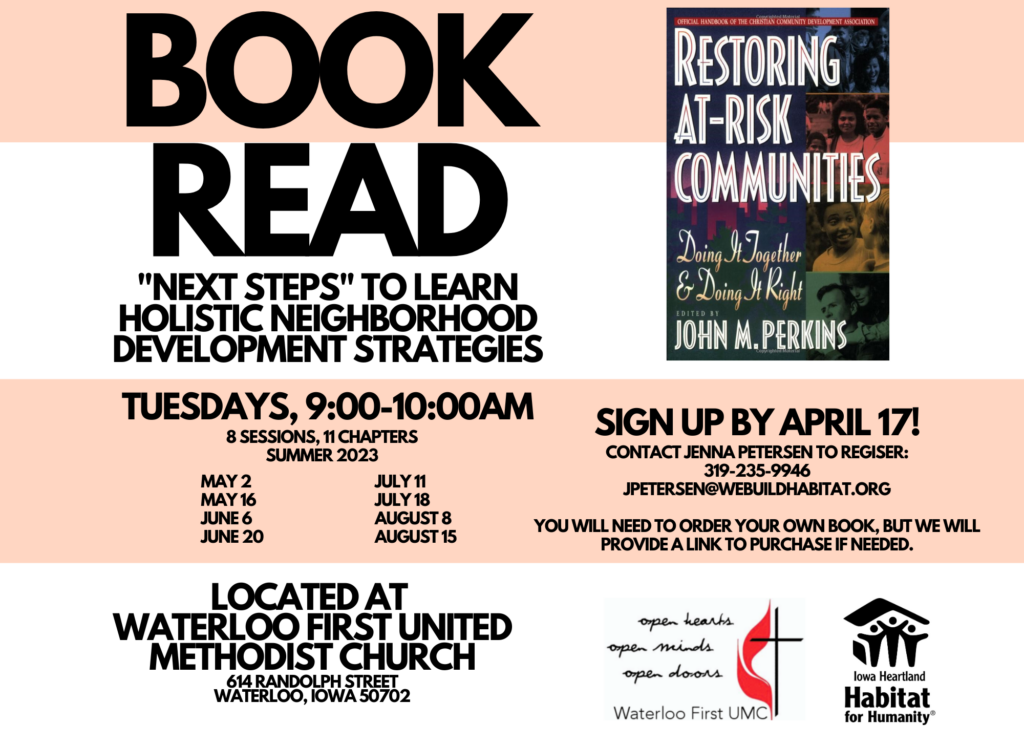
"Next Steps" Community Book Read
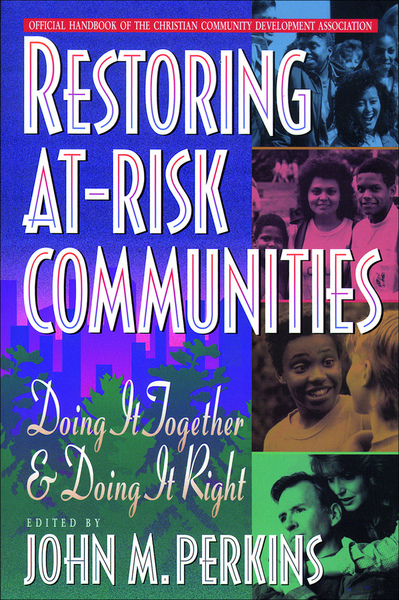
One of our longtime volunteers and current board members, Donna Brown, met with me to plan the very first Book Read for a group of interested community members to gather, discuss, and think about their current investment into the community through the lens of one of the founders of the Christian Community Development Association, John Perkins.
We had an attendance of 9.5 people per session on average, which showed how interested people were in the idea of learning about community development from a Christian perspective.
I offered to write discussion questions and sent them to the group most weeks in advance of the discussion.
During this "Next Steps" Book Read, the group had lots of conversations about how people view poverty, systemic disinvestment in neighborhoods, and what it means for those of us who are non-residents trying to make an impact in the community. We reiterated this point throughout the book read that is so important: we want to be doing activities WITH the residents, not TO/FOR neighbors.
Another discussion during this group was that the group was entirely white, and we didn’t seem representative of the neighborhood in racial makeup. After the course, I spoke with Molly Juza from Orchard Hill Church to see if I could watch some race-related videos to further my own understanding and education. From that, I watched the free version of "Juneteenth: Faith & Freedom" online by myself. We also later offered 4 film showings of this same film to the community in November 2023, January 2024, and June 2024, at different church locations.
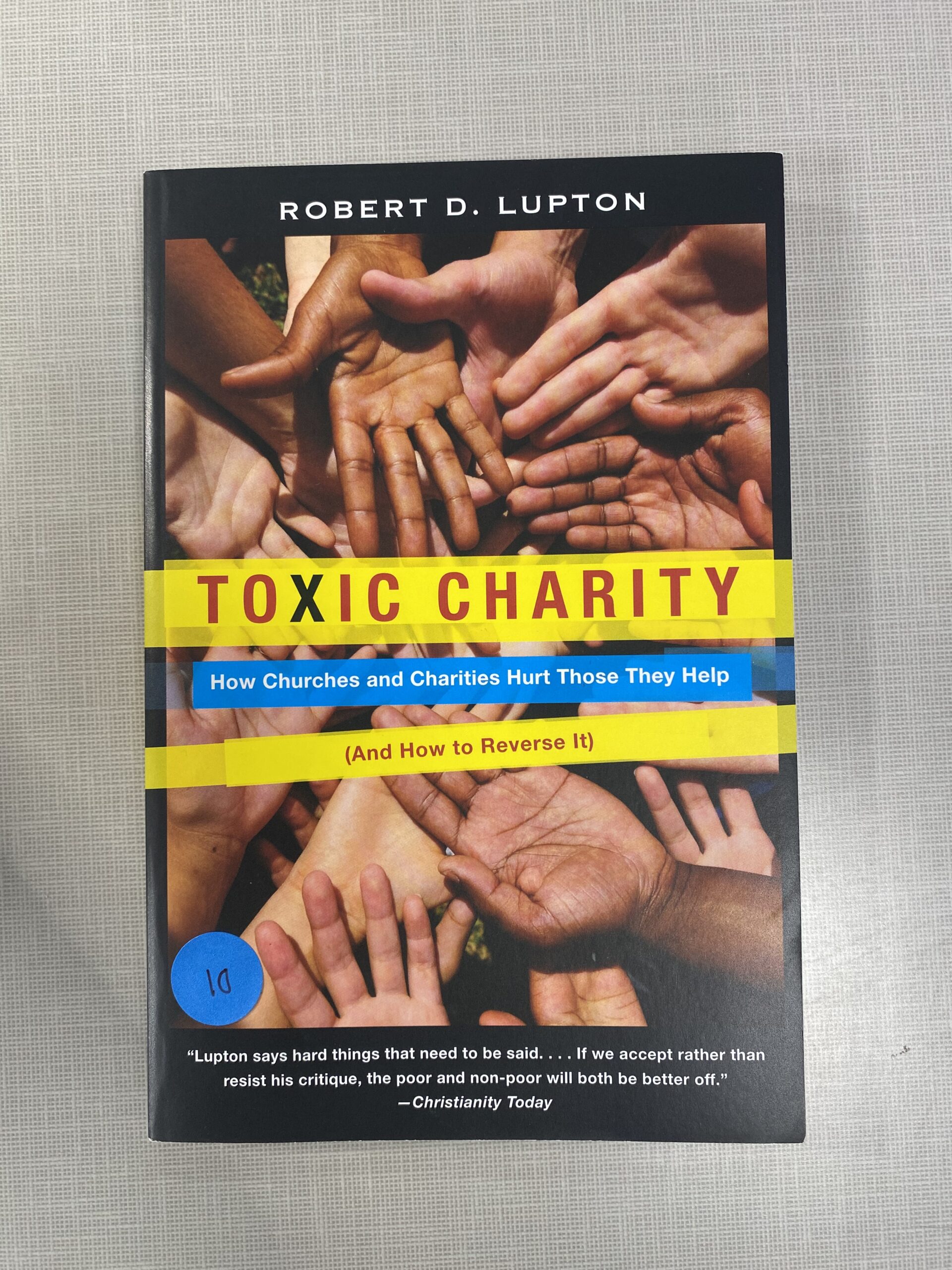
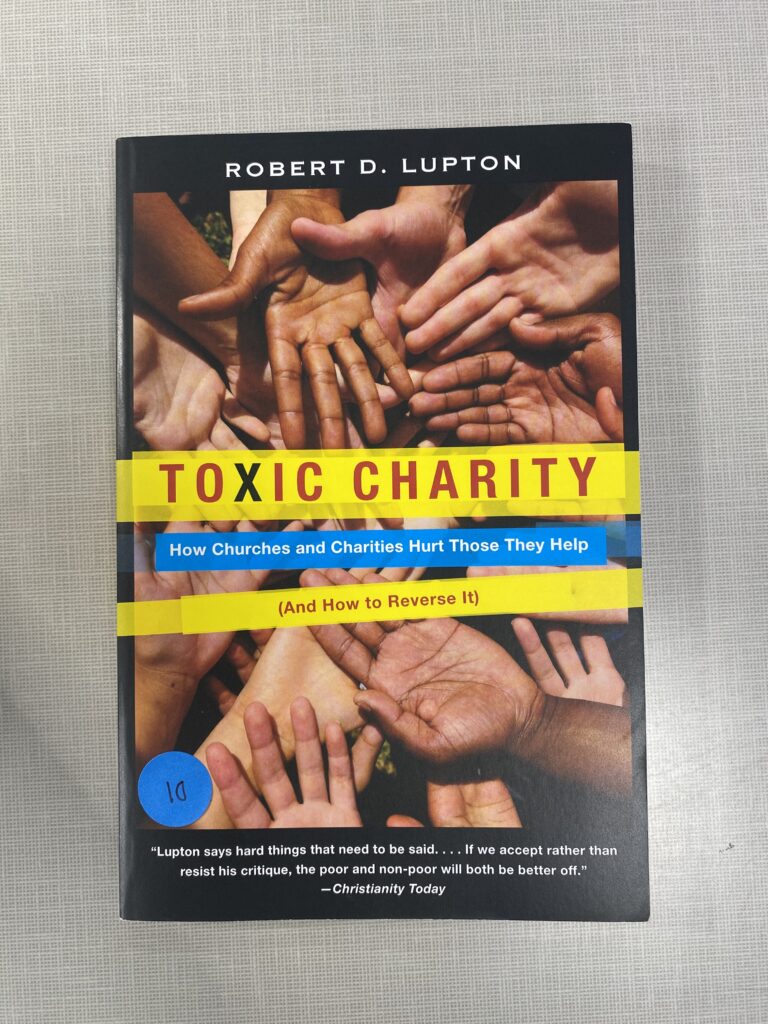
The next book read after this one took place in January-February 2024. We read the book Toxic Charity by Bob Lupton.
January-February 2024
Toxic Charity Book Read
Toxic Charity is a book written by Bob Lupton of FCS Ministries in Atlanta, GA. He has done work and lived in communities experiencing needs for over 40 years. His book is a critique of the ways that churches typically do missions and charitable giving.
This book read was scheduled to last for 6 weeks.
We started this series with the first meeting having Karin Rowe, the Executive Director of House of Hope CCD, speak about House of Hope’s work as a local non-profit that focuses on housing and empowerment for women experiencing homelessness. This served as a great example of an organization that has broken away from traditional models of charity that many folks in the room may be familiar with through their churches or organizations.
A key objective from this book read was to highlight the way that many organizations and countries are doing charity that are not helpful, and explore alternative solutions to the issues that we face.
One of my favorite portions of Chapter 1 talks about the Oath for Compassionate Service. If interested, you can actually check out a very similar version on the Lupton Center website: Oath for Helpers | Lupton Center.
We also really love this book because Bob Lupton is such a champion of having a neighborhood focus. I highly recommend reading and applying this book to your local context!
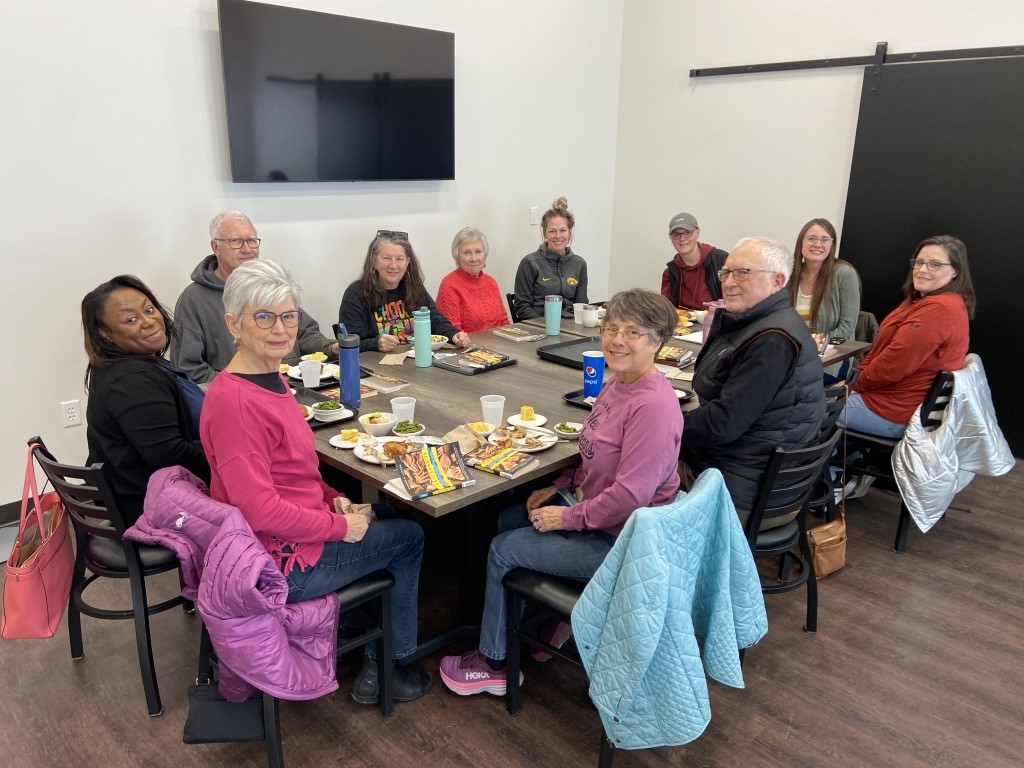
We had an attendance of 8+ people per session on average at the Toxic Charity Book Read. As you can see in the photo above, we had a lot of people there that day.
We chose to meet for this book read at the Willie Mae Wright Community Room at the All-In Grocers store, with the option to purchase a delicious hot lunch from Grandma's Hands restaurant if you wanted. Many group members patronized the restaurant and store when visiting for the book read.
The Community Learning Collaborative was officially formed after the Toxic Charity Book Read ended.
This February, we are in the midst of studying an applying Dr. Ruby Payne's "A Framework for Understanding Poverty" during a 4-week book read that meets at the Waterloo Public Library. We hope that you can join us for a future Book Read!
Renforcer la stabilité, les opportunités et l'espoir grâce à l'accession à la propriété, à la résilience des quartiers et à la collaboration communautaire.
Notre engagement en faveur de l'appartenance et des opportunités
Chez Iowa Heartland Habitat for Humanity, nous pensons que chaque personne mérite un endroit qu'elle peut appeler son foyer et une communauté où elle est accueillie, respectée et où elle a les moyens de s'épanouir. Enracinés dans notre foi et guidés par notre engagement envers la koinonia, nous nous efforçons d'élargir les opportunités et de favoriser l'appartenance à travers chaque aspect de notre mission - de la manière dont nous construisons et des personnes que nous servons à la culture que nous cultivons au sein de notre équipe. En tant qu'employeur et organisme de logement souscrivant au principe de l'égalité des chances, nous rejetons toute forme de discrimination et nous nous efforçons de modeler un monde où la compassion et les opportunités conduisent à un changement durable. Nous accueillons des personnes de toutes origines, identités et capacités - y compris des membres des communautés LGBTQ+ et BIPOC, des personnes de toutes confessions ou sans confession, et des personnes de toutes capacités - parce que lorsque nous nous unissons grâce à l'amour de Dieu, nous construisons plus que des maisons - nous construisons une communauté et de l'espoir pour tous.
Politique de non-prosélytisme
Habitat for Humanity et ses organisations affiliées ne feront pas de prosélytisme. Habitat ne travaillera pas non plus avec des entités ou des personnes qui insistent sur le prosélytisme dans le cadre de leur travail avec Habitat. Cela signifie qu'Iowa Heartland Habitat for Humanity n'offrira pas d'assistance à la condition expresse ou implicite que les personnes adhèrent ou se convertissent à une foi particulière ou écoutent et répondent à des messages conçus pour induire une conversion à une foi particulière.